 admin
admin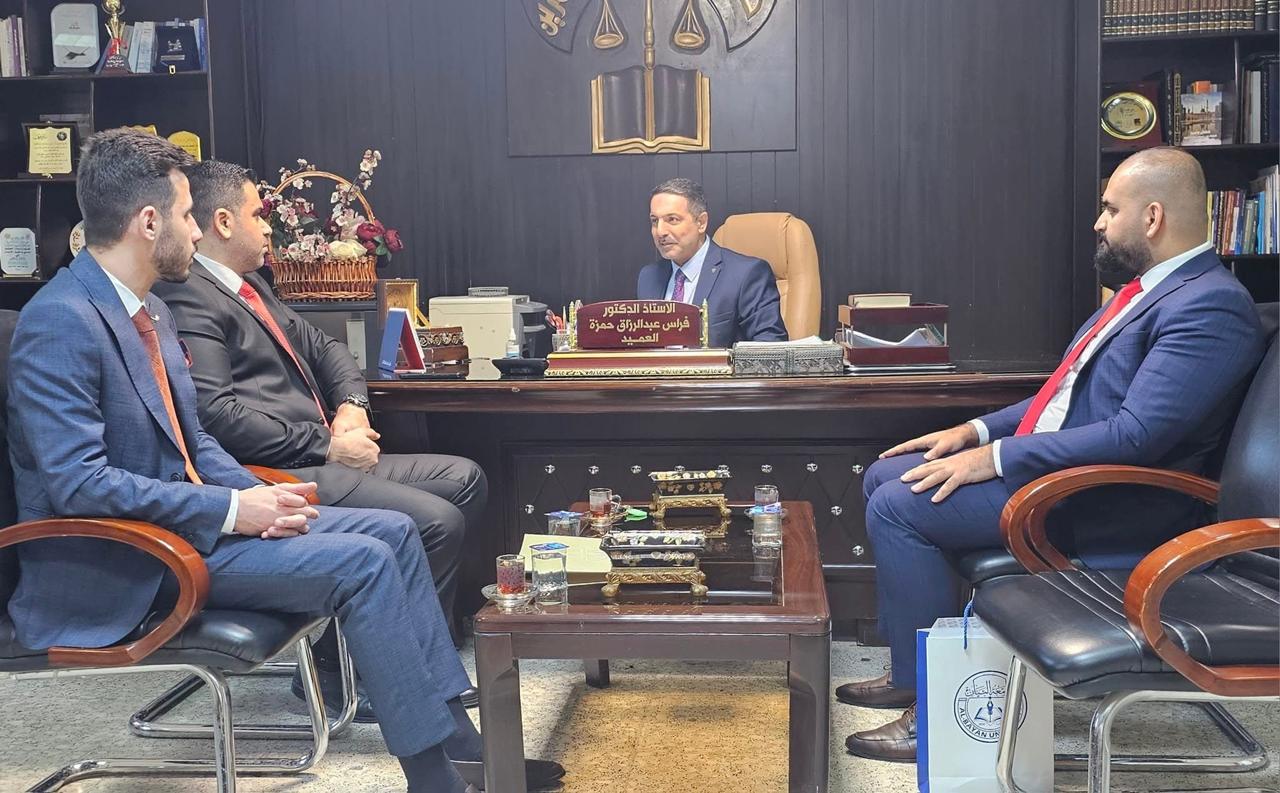
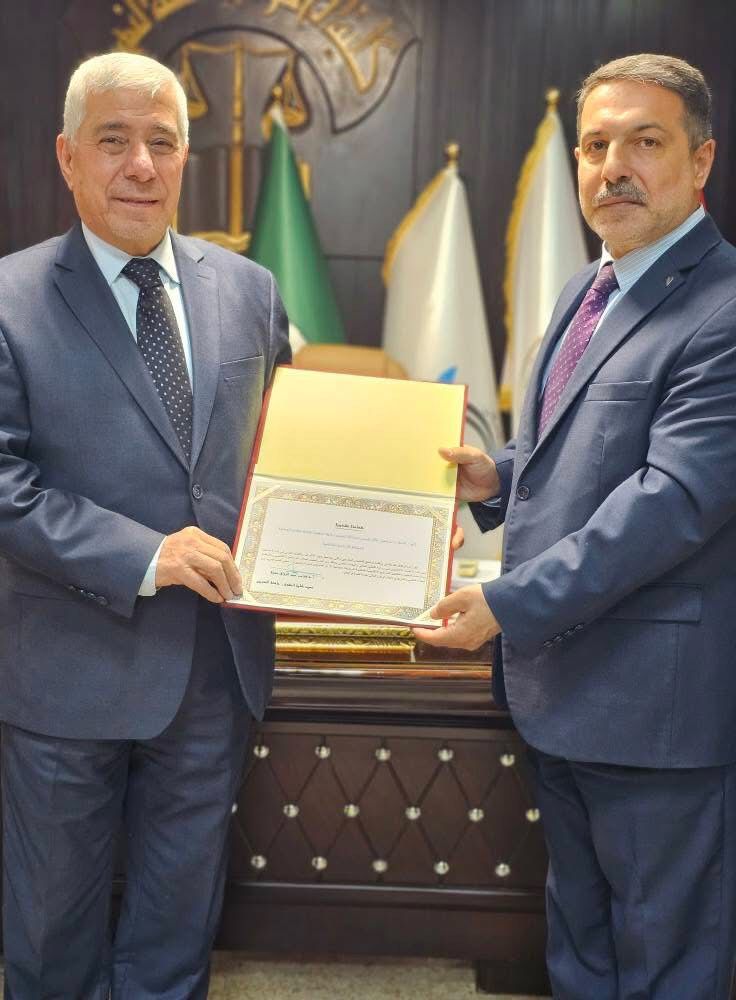
In the context of strengthening the college’s role as a hub for community development and scientific research, the College of Law at Al-Nahrain University seeks to build strong cooperative relationships with local entities within and outside the Ministry of Higher Education. This is aimed at exchanging expertise, supporting research projects, and developing human resources. This local cooperation represents an effective tool in supporting the college’s mission and enhancing integration between the college and the community. Through clear and institutionalized cooperation mechanisms, tangible results can be achieved that contribute to raising academic and developmental levels, which in turn contributes to serving society and achieving the vision of sustainable development. Based on this, the College of Law concluded several scientific cooperation agreements with public and private universities during 2024, including scientific cooperation agreements with Al-Farahidi Private University, Uruk Private University, Al-Bayan Private University, Al-Hikma University, Al-Mustansiriya Center for Arab and International Studies, and Al-Mamoun Private University College. In addition, memoranda of understanding were concluded with institutions outside the Ministry of Higher Education, such as the scientific cooperation agreement between the College of Law and the Supreme Judicial Council, and the cooperation agreements with the Military Industrialization Authority and the Iraqi Ministry of Trade and Cooperation. With the Judicial Institute and the Police College.
- The college held several annual scientific conferences, including Al-Bayan University and Al-Farahidi University, and the college contributed to a special edition of the joint conference with Al-Farahidi University in the college’s journal.
- Cooperation with the relevant authorities in the development of programs, academic plans, curricula and courses.
- Participation of teachers in counterpart organizations in teaching and training students of the relevant colleges for some subjects that require the applied aspect, such as virtual court.
- Exchanging books, periodicals and research in scientific journals with the relevant authorities